

CASINO GUIDE
New Zealand Online Casino Rules and Licensing
The licensing transition separates oversight of the framework from decisions on individual applications.
 Available in US
New Zealand’s Online Casino Rules Are Changing
New Zealand’s online casino market is moving from a system without domestic licensing for offshore services to one built around local licences. The change does not mean every site serving New Zealanders is already licensed, or that the new system is fully in place. The transition has boundaries, and who does what matters if you are trying to understand what the rules actually cover.
The Department of Internal Affairs (DIA) is New Zealand’s main gambling regulator and oversees the framework for online casino licensing. The Gambling Commission has a different role: it considers licensing applications, decides whether to grant them and issues licences. It also rules on proposed changes to licence conditions. In plain terms, the DIA oversees the regulatory framework; the Commission makes decisions on individual applications and licence changes.
That distinction is worth keeping straight. A regulator overseeing a framework is not the same as a body deciding an application. If a provider seeks permission under the new system, the Commission is the decision-maker on that application. The DIA’s role sits around the licensing system as a whole.
Use this index to review the available operator details before deciding where to look more closely. The notes focus only on the information provided for each entry.
-
BitStarz
- License
- Curaçao Gaming Authority, licence no. OGL/2024/165/0185
BitStarz lists a Curaçao Gaming Authority licence, number OGL/2024/165/0185.
-
Neospin
- License
- Tobique Gaming Commission, licence no. 0000064
Neospin lists a Tobique Gaming Commission licence, number 0000064.
-
Lamabet
- Payout speed
- 1-3 business days
Lamabet lists a payout speed of 1–3 business days.
-
Ricky Casino
- License
- Tobique Gaming Commission, licence no. 0000002
Ricky Casino lists a Tobique Gaming Commission licence, number 0000002.
-
7Bit Casino
- License
- Tobique Gaming Commission, licence no. 0000091
7Bit Casino lists a Tobique Gaming Commission licence, number 0000091.
-
Play Grand
- License
- Malta Gaming Authority, licence no. MGA/B2C/370/2017
Play Grand lists a Malta Gaming Authority licence, number MGA/B2C/370/2017.
-
N1 Casino
- License
- Malta Gaming Authority, licence no. MGA/B2C/394/2017
N1 Casino lists a Malta Gaming Authority licence, number MGA/B2C/394/2017.
-
Wintino
- Payout speed
- 1-3 business days
Wintino lists a payout speed of 1–3 business days.
-
Zotabet
- License
- 07017519840
- Payout speed
- 1-3 business days
Zotabet lists licence reference 07017519840 and a payout speed of 1–3 business days.
A new domestic licensing framework
The Online Casino Gambling Act 2026 created New Zealand’s first domestic licensing regime for online casino gaming. It came into force on 1 May 2026. The Act sets the legal basis for licensing providers that offer online casino gambling in the country, a substantial shift from the position beforehand.
Before the Act, online casino services offered from outside New Zealand did not come under licensing or supervision by a New Zealand regulator. A person using an offshore site in that period also had no domestic government recourse if something went wrong. That is a specific limit of the old arrangement: a site being available to someone in New Zealand did not mean it was overseen by a New Zealand licensing system.
New Zealand law also draws a line between online services and casinos based domestically. The Gambling Act 2003 does not permit online casinos to be based in New Zealand, and domestic online casinos are prohibited. The newer Act establishes a local licensing regime for online casino gambling, but it does not erase that distinction or turn the country into a place where domestic online casinos can simply operate.
I would not treat “available in New Zealand” as a synonym for “licensed in New Zealand”. They describe different things. The new framework changes the route to local authorisation; it does not make every offshore provider part of that framework by default.
The transition has a defined boundary
The new law includes a transition running from 1 May 2026 to 1 December 2026. During that period, only providers that were already operating in New Zealand may continue, and then only within the Act’s transitional provisions. That permission is temporary; it is not the same as holding a licence under the new regime.
The date also matters for providers that were serving New Zealand customers before the Act took effect. They may continue operating until 1 December 2026, subject to the transitional rules. A provider that has not applied for a licence must stop conducting online casino gambling in New Zealand by that date. So “already here” is not a permanent exemption, and “still operating” does not, on its own, establish that a provider has secured a licence.
The timetable does not end with the transition. The full licensed system is not expected to be operating in its entirety until 2027. Unlicensed operation is expected to become an offence around mid-2027. Those dates describe separate stages: the transition ends first, the full regime follows, and the expected offence point comes later. It would be misleading to compress them into a claim that every part of the licensing system is already active.
Providers also face a clear consequence if an application fails: a provider whose licence application is declined must stop all online casino gambling operations in New Zealand and leave the market. That is different from a routine change to licence conditions, which the Commission is responsible for approving. The rules therefore involve both a decision about entry and ongoing control of the terms attached to a licence.
During the transition, providers are prohibited from advertising to people in New Zealand. Advertising by licensed operators is permitted under tight rules, while sponsorships are prohibited. These are not grounds to assume that any particular advertisement or sponsorship is allowed; the relevant distinction is the applicable rule and the provider’s status. A glossy message is not evidence of regulatory approval.

What the change does—and does not—tell you
For a reader, the practical point is to separate three questions: whether a service can be reached, whether its provider is licensed under New Zealand’s new regime, and which regulator handles the relevant decision. Offshore casinos remain practically accessible to residents, and players do not face a fine or criminal prosecution merely for using an offshore casino without a local licence. That does not mean an offshore provider is locally licensed, or that a New Zealand regulator supervises it.
The Act changes the regulatory framework, but the transition means the market cannot be described with a simple “licensed” or “unlicensed” label based only on a site’s presence. Existing providers have a temporary route to continue under transitional provisions; the Commission decides licence applications; and the DIA oversees the framework. The full regime is expected to take shape in 2027, not all at once on the day the Act came into force.
That is the useful distinction. A new law is in force, but its licensing system is still moving through defined stages. The rules set out who oversees the framework and who decides individual applications; they do not make every online casino serving New Zealanders a locally licensed business. And while the transition provides temporary permission for qualifying existing providers, it is not a substitute for the licence the new system is designed to issue.
Payments: What This Plan Can—and Can’t—Tell You
Payment details are where vague casino copy can turn into a real decision. “Fast”, “simple” and “secure” sound reassuring, but they do not tell you what will happen when you try to move money in or out. I’ve learned to treat those words as decoration until I can see the actual terms attached to the transaction.
I can’t responsibly point you to a particular payment option or tell you what it costs, how long it takes, or whether it will work for your account. Those details can depend on the service, the payment provider and the conditions shown at the time. Guessing would be worse than leaving a blank.
Start with the whole transaction
It’s easy to focus on putting money in and forget that getting it back is a separate part of the experience. A payment method might appear on a deposit screen without telling you whether the same method is available for withdrawals. Nor does a logo or a short label explain what checks, limits or conditions could apply.
Before you choose, look for the terms that describe both directions of travel: depositing and withdrawing. If the information only explains one, don’t silently assume the other works the same way. That was one of my less clever habits: I’d treat a familiar-looking option as if the details were obvious. They weren’t.
The useful question isn’t simply “Can I pay this way?” It’s “What does this option mean for the full transaction, from the first step to the point I want the money returned?” If the answer is unclear, pause rather than filling in the gaps with optimism.
Read the figures, not the adjectives
When a payment page uses words such as “free” or “instant”, check what those claims actually refer to. Is the wording about a deposit, a withdrawal, or something else? Does it describe the payment provider’s part, the casino’s part, or the entire process? A confident label can leave all of that blurry.
Look for any stated fee, currency conversion information, processing estimate, minimum or maximum, and conditions attached to the option. I’m not saying those will apply in every case; I’m saying they are the kinds of details that matter when they are presented. If a page does not make a relevant point clear, don’t treat silence as a promise that there is no cost or delay.

Also check whether the amount you enter is shown in the currency you expect, and whether the final confirmation keeps that currency clear. A number without a clearly identified currency is not enough to make a careful decision. If conversion is involved, the displayed terms should let you understand what rate or charge is being used before you confirm. If they don’t, you have a good reason to stop and seek clarification.
Don’t let the cashier do the explaining too late
The moment just before you confirm a transaction is worth slowing down for. Read the summary on that screen, not only the general payment page. Make sure the method, amount and currency match what you intended, and look for any charge or condition shown there. If the details have changed or aren’t clear, don’t press through just because you’ve already spent time filling things in.
Keep a record of the terms you relied on. A screenshot or saved page can help you remember what was displayed if the wording later becomes hard to find. That isn’t a guarantee that a dispute will be resolved a particular way; it’s simply a more reliable memory than “I’m sure it said something about no fees.” I have trusted my memory before. Bad filing system.
If the cashier gives you a choice among options, compare the information shown for each rather than assuming the most familiar one is automatically the best fit. Familiarity can tell you that you recognise a name. It cannot tell you what this specific transaction will cost, what conditions attach to it, or how a later withdrawal will be handled.
Do
- Compare information shown for each option
- Keep a record of the terms you relied on
- Check the final summary screen
Don’t
- Assume the most familiar option is best
- Press through if details are unclear
- Trust your memory over saved records
Keep your own records straight
Use a payment account you control, and take care that the information you enter is accurate. If a page asks for details you don’t understand, stop and find out what they mean rather than improvising. Don’t send payment credentials through a message or form whose purpose you can’t verify, and don’t let anyone rush you past a screen you haven’t read.
It can also help to keep your own record of what you intended to do and what the confirmation says happened. Note the date, the amount and currency shown, the option selected, and any reference the transaction provides. That gives you something concrete to compare with a later account statement or support response. It doesn’t establish that a payment has been handled correctly; it makes it easier to describe what you saw.
If something doesn’t match, avoid repeating the transaction just to see whether it works the second time. First check the status displayed in the account and the information supplied by the payment provider. If you contact support, ask a specific question and keep the response. “Where is it?” is less useful than identifying the transaction and asking what status is recorded and what action, if any, is required from you.
A cautious choice beats a quick one
Payment information is only useful when it answers the questions you need answered. A row of logos doesn’t establish availability for your account. A headline about speed doesn’t explain the stage being timed. And a statement about cost is meaningful only when you can tell which part of the transaction it covers.
So I’d make the choice in this order: understand the option, read the terms for deposits and withdrawals, check the final confirmation, and keep a record. If a point that matters to you remains unclear, don’t guess. Choose only when you can explain to yourself what you are agreeing to.
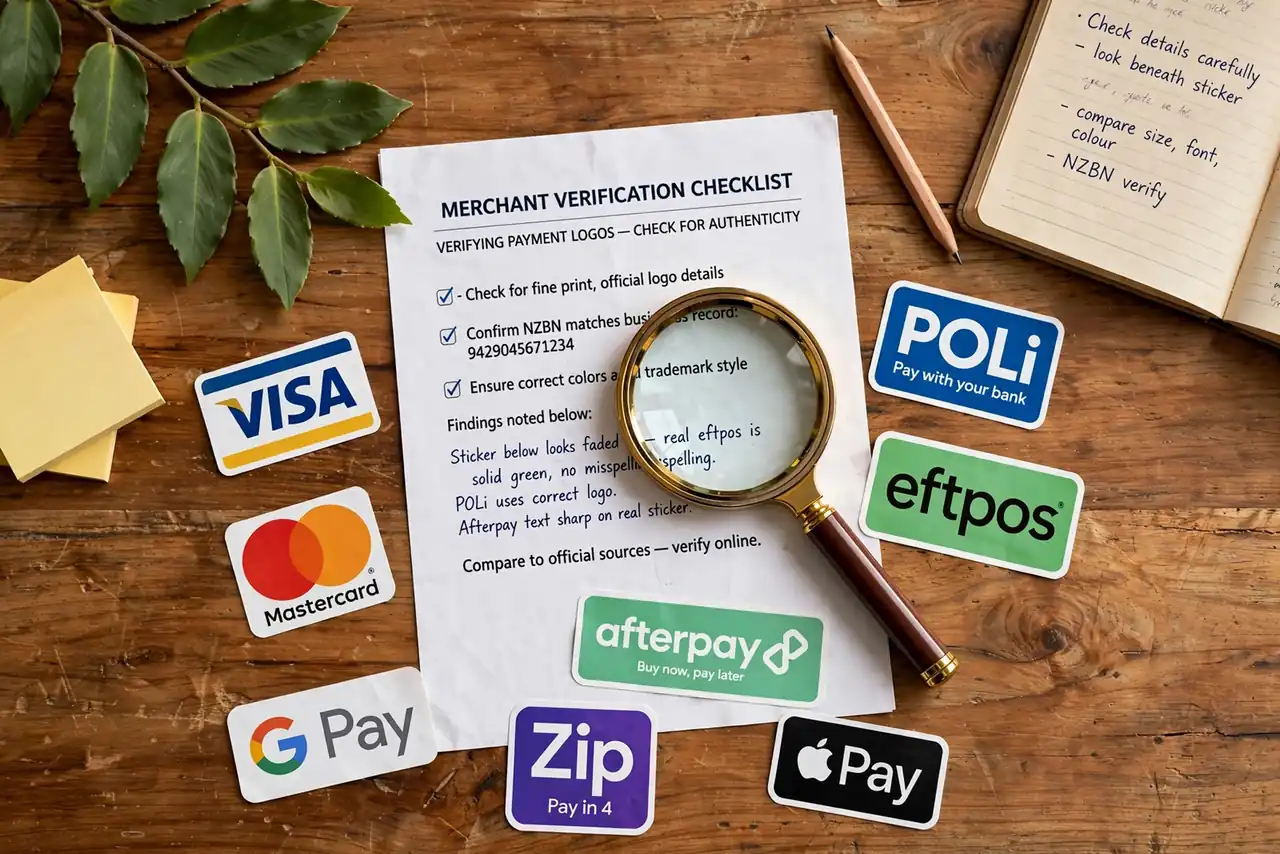
That is less exciting than a promise of effortless payments. It is also less likely to leave you wondering what you clicked.
Bonuses Without the Sales Pitch
A casino bonus can look like extra value at first glance. I’ve learned not to treat the headline as money in my pocket. It is an invitation to pause and read what the offer actually says, not a reason to sign up or keep playing. If the wording leaves you unsure what you would receive, or what you would have to do to use it, that uncertainty matters.
Promotional copy is designed to catch your eye. Words such as “free”, “welcome” and “matched” can make an offer sound straightforward, but the label alone tells you little about its practical value. A bonus may come with conditions on who can claim it, how it can be used, or whether any resulting balance can be withdrawn. Those are the details to understand before deciding whether the offer is worth your attention.
I used to focus on the amount printed in large type and skim the rest. That was backwards. A headline can be easy to remember; the conditions are what determine what the offer means to you. Now I treat the main claim as the start of the reading, not the end.
Read past the headline
Take the offer apart into plain questions. Who is eligible? What action is required to claim it? Is there a time limit? What conditions apply to using it, and what happens if you do not meet them? Are there restrictions on withdrawing a balance associated with the promotion? If the terms use language you cannot interpret confidently, do not fill in the gaps with the most favourable guess.
- Identify who is eligible for the offer
- Determine the action required to claim it
- Check for time limits
- Review restrictions on withdrawing the balance
That is not a claim that every bonus has the same conditions. It is a way to check an offer without assuming that two promotions work alike. The details can matter more than the advertising label, so look for the full terms attached to the specific offer you are considering. A short banner is not a substitute for them.
Pay attention to whether the terms explain the sequence clearly. You should be able to tell what you need to do, what counts toward the offer, and what result follows from meeting or not meeting its conditions. If those steps are hard to follow, the sensible response is not to assume they will sort themselves out later. Leave the offer alone until you understand it.
Separate the bonus from your budget
A promotional balance is not the same thing as money you set aside for yourself. It may be subject to conditions, and the headline value does not tell you how useful it will be in practice. I find it safer to make any spending decision without counting a bonus as part of my budget. If the numbers only seem acceptable because an offer is included, that is a warning to step back.
This is where “extra” can do a bit of sneaky work. It frames the promotion as something added to a decision you were already making. But you may be changing your plans simply because the offer appeared. You might spend more time considering a casino, create an account, or continue when you otherwise would have stopped. The bonus does not have to be a bad deal for that to happen; the important thing is noticing whether it is steering your choice.
I try to ask myself one blunt question: would I still want to do this if the promotion were not there? If the answer is no, the offer has become the reason, rather than a small detail. That is usually enough for me to close the page. No bonus is worth pretending I had a different plan.

Compare meaning, not slogans
Two promotions can use similar language while setting out different conditions. So comparing the headline words is not much of a comparison. Read each set of terms on its own, and check that you understand what the offer requires and what it does not promise. If one promotion is easier to explain in your own words, that does not automatically make it better; it does make the decision less dependent on guesswork.
Do not infer a benefit from a label. “Free” does not by itself explain whether a deposit or another action is needed. “Matched” does not tell you what restrictions apply. “Welcome” does not establish that you qualify. The terms attached to the particular offer are what you need to assess. If the wording leaves a key point unresolved, the headline cannot resolve it for you.
It is also worth separating the promotion from claims about the overall experience. A bonus does not, by itself, tell you whether an operator is suitable for you, how straightforward its service will be, or whether you will enjoy using it. Promotional language can make those ideas feel bundled together. They are not the same decision.
Know when to walk away
You are allowed to decide that an offer is too complicated, not relevant, or simply not worth your time. You do not need to claim every promotion you see. You do not need to keep reading because you have already clicked through. And you do not have to treat a limited-looking message as a deadline for making a decision.
If you choose to consider an offer, keep a clear record of the terms you relied on and make sure you are looking at the conditions for that specific promotion. If what you see later does not match your understanding, stop and seek clarification rather than carrying on based on assumption. That small pause can prevent a bigger misunderstanding.
The same caution applies when an offer is described as “exclusive” or “personal”. Those words can sound like a reason to act quickly, but they do not explain the actual conditions. Read the details, check that you qualify, and decide whether you want the offer on its own merits. If the only persuasive part is the pressure to act, that is not much of a case.
Bonuses are marketing, and marketing puts the attractive part in front. Your job is not to find a way to make every promotion sound worthwhile. It is to understand the conditions, keep the offer separate from your own budget, and be comfortable declining it. When I cannot explain an offer plainly, I do not count on it. Simple as that.
Slots and Software: No Names to Rely On
When I look at the software behind a casino, I try not to let a polished screen do the thinking for me. A familiar-looking reel, a neat menu or a confident label can make a page feel more informative than it is. None of those things, on their own, tells you who made the software, what titles are available, or whether the page reflects what a player would actually encounter.
That distinction matters. “Premium” is a sales word; in practice, it is only a label until someone explains what it means and supports the claim. The same goes for “trusted”, “leading” and “exclusive”. I’ve caught myself treating a tidy presentation as a kind of proof. It isn’t. It is presentation.

A name is not the whole story
A software provider’s name can be useful when it is clearly attached to something you can check. But a name by itself does not tell you what is offered at a particular casino, whether that information is current, or what conditions apply to access. It is a starting point for checking, not a verdict.
The reverse is true too. A page without a provider name does not give you enough to fill in the blank from the look of the interface. Guessing from colours, symbols or layout is still guessing. I would rather leave the identity unresolved than turn a visual hunch into a confident statement.
There is a difference between the casino’s own branding and the name of the company behind its software. Pages can put those identities close together, making them easy to blur. When that happens, slow down and ask what each name actually refers to. A brand on the page is not automatically the software maker, and a software maker’s name does not automatically describe the whole casino.
That sounds obvious. It is easy to miss when the page is designed to keep you moving.
What a screenshot can and cannot show
A screenshot can show what was on a screen at a particular moment. It cannot, by itself, establish that the same item is currently available, that the image is complete, or that the caption beside it is accurate. Cropped images are especially easy to overread: a logo may be visible while the context that explains it is not.
I try to separate what I can see from what I am being asked to infer. “This image contains a provider name” is an observation. “Every title on this page comes from that provider” is a broader claim and needs its own support. One does not follow automatically from the other.
The same caution applies to short descriptions. A phrase such as “full library” sounds substantial, but without a clear definition it leaves basic questions open: full in relation to what, at what point in time, and on which part of the site? If the wording cannot be pinned down, I do not treat it as a meaningful comparison.
A simple habit helps: read the label, then look for what the label actually identifies. Is it naming a company, a product, a category, or just a promotional collection? Those are different things, even if a page places them in the same box.
Don’t turn interface clues into claims
People naturally look for patterns. If two screens seem alike, it is tempting to assume they share the same provider. If a familiar name appears once, it can be tempting to extend that name to the whole catalogue. I understand the impulse; I have made that kind of leap myself because it saves time. It also creates confidence the evidence may not deserve.
An interface can be a clue, but a clue is not confirmation. Similar design does not prove common ownership or software. A menu label does not establish the range behind it. A promotional image does not demonstrate that the pictured item is available to every visitor. I would keep those observations narrow rather than turning them into a neat story.
This is not about being suspicious of every page. It is about keeping the size of a claim in proportion to what you can actually establish. If a detail is visible, describe that detail. If the next step depends on an assumption, stop there. No clever wording makes an assumption more solid.

A practical way to read software information
When software information is presented, I look for clarity rather than a long roll-call of names. Does the page distinguish the casino’s identity from the software identity? Does it say precisely what a provider name applies to? Is the description specific enough to be checked, rather than padded with praise? If the answer is unclear, I do not treat a longer paragraph as better evidence.
I also pay attention to how a statement is framed. “Includes” can sound definite, but it should still be clear what is included and where the statement applies. “Available” can sound current, but a page may not explain when it was checked. I am not claiming that any particular wording is false; I am saying that vague wording leaves room for several readings, and I do not choose the most flattering one by default.
Keep a note of the exact detail you are trying to establish. If it is the software maker, do not let a general casino description stand in for it. If it is a specific title, a general provider reference does not answer that either. If you cannot connect the information to the thing you mean, the answer is still unsettled.
Not settled is not the same as bad. It simply means you should not build a decision on a detail you have not established.
The honest limit
I am not going to invent a provider list or attach names to software without a sound basis. Nor would I use a familiar visual style as a substitute for identification. That might make the page feel more complete, but it would give you something less useful: a confident-looking guess.
For me, the sensible standard is modest. Separate the casino brand from the software identity. Read claims at their literal size. Treat images and slogans as presentation unless they support a precise statement. And when a name cannot be tied clearly to the software in question, leave it unresolved instead of filling the gap yourself.
No catalogue of names. No borrowed certainty.
Casino Games: What’s Missing From the Evidence
A casino games page can sound useful while telling you very little. “Wide choice” is an impression, not a description. “Something for everyone” is advertising language; underneath it, there may be no clear account of what you can actually play or how a game works. I’ve learned to distrust the confident adjective and look for the details that would let me make my own judgement.
That does not mean every game needs a long review. It means the basics should be clear before you treat a category label as a reason to play. What are the rules? What decisions can you make during a round? How is a result determined? Are the instructions understandable before you commit anything? Those questions are more useful than a sweeping claim about variety.
What a category label can—and can’t—tell you
A category groups games together; it does not tell you whether the individual games suit you. Two things placed under the same broad heading may ask for different levels of attention, involve different choices, or simply feel different to play. The label is a starting point for finding information, not a substitute for it.
I used to read a familiar name or category and assume I already understood the experience. That was lazy. Recognition is not the same as knowing the rules, and a familiar format does not tell you what options are available in a particular version. Before you start, look for a plain explanation of the game itself rather than relying on a thumbnail, slogan, or short description.

If the explanation is hard to find, that is worth noticing. It doesn’t prove anything about the game’s quality; it just means you have less to go on. I would rather pause than fill in the gaps with assumptions. A quick read first. A better habit.
Read the rules before the first round
Rules are not decoration. They tell you what actions are available, what counts as a result, and how the round comes to an end. If a description skips those points or uses language you can’t make sense of, don’t assume the missing detail is unimportant.
Pay attention to the choices the game gives you, too. Some games may involve decisions as you play; others may ask you to make little or no input after starting. That distinction can affect whether a game feels involving, but it doesn’t tell you which one is better. It tells you what kind of experience to expect, if the explanation is clear.
A sensible check is to read the instructions before making a deposit or starting a paid round. If a practice option is available, it may help you understand the controls, but don’t treat practice as evidence that paid play will feel the same in every respect. The important point is to understand what you are choosing, not to chase a particular result.
Don’t confuse excitement with information
Game pages often lean on words such as “immersive” or “exciting.” Those words describe a mood the seller wants you to imagine; they do not explain the rules or establish what you will experience. I’ve made the mistake of letting polished presentation stand in for useful detail. It doesn’t.
A clear description should help you answer practical questions without making you decode promotional language. If you cannot tell what happens during a round, what decisions are yours, or where the rules are explained, the presentation has not done the job. You do not owe a game your attention just because it is prominently displayed.
The same caution applies to claims about a game being popular, easy, or suited to beginners. Without a meaningful explanation, those are labels, not guidance. “Easy” might refer to simple controls, but it does not necessarily mean the rules are obvious or the outcome predictable. Separate the sales pitch from the information you can actually use.
Choose by understanding, not by a promised outcome
No category label can tell you how a particular session will go. A game’s description can explain its rules, but it cannot turn uncertain results into a dependable plan. If you catch yourself treating a game as a way to recover a loss or solve a money problem, step away rather than looking for a supposedly better category. I have found that mood makes weak reasoning feel convincing.
It helps to decide what you are looking for before browsing: perhaps a format you understand, or simply a clear explanation of the rules. That is a preference, not a strategy for winning. If nothing on offer is described in a way you can follow, there is no need to pick something anyway. Closing the page is a valid choice.
 Payments at New Zealand Online CasinosExplore New Zealand casino options by deposit size and payment type, including cards, e-wallets, vouchers and cryptocurrencies.
 Casino Bonuses in New Zealand: Offers and Free SpinsExplore bonus categories listed for New Zealand casinos, from free spins and welcome offers to cashback, loyalty rewards and no-deposit bonuses.
Keep the distinction between entertainment and expectation sharp. A game may hold your attention; that does not make its outcome controllable. Nor does learning the rules guarantee that you will enjoy playing. I’d rather admit that plainly than dress uncertainty up as expertise.
A useful standard for game descriptions
When you assess a casino game, look for information that lets you understand the experience rather than language that tries to sell it. Can you find the rules? Are the available decisions explained? Is it clear how a round works? Can you understand the description without leaning on assumptions? If not, you have a reason to wait.
Those checks do not rank games or tell you what to choose. They give you a way to decide whether you know enough to make a choice at all. That is a smaller promise, but a more honest one.
I won’t pretend a broad category tells you what is available or that one type of game is right for every player. The useful starting point is much less glamorous: understand the rules, notice what remains unclear, and don’t let a confident description make the decision for you. Plain enough.
Casinos in New Zealand: Online Options and Guides
Content created by the «casinoslotnz.com» team